Showing posts with label Free speech. Show all posts

Tuesday, August 26, 2008

Yorktown Pace Bus Ban Demonstrates Public Space Importance
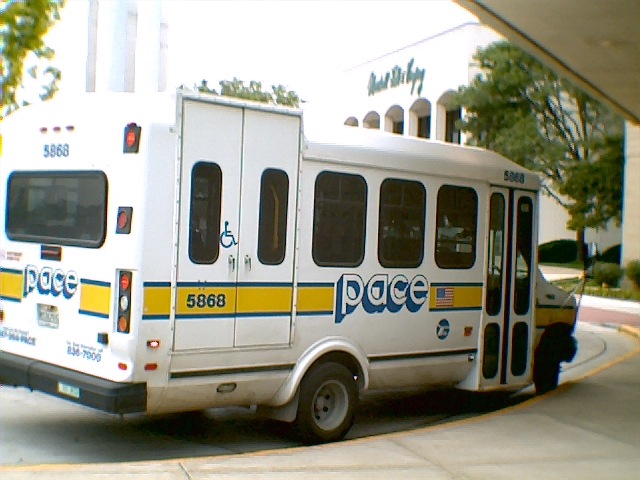
Yorktown's ban on Pace buses is just yet another reminder that commercial shopping malls, no matter how public they may appear, are still privately-owned and largely subject to the whims of the for-profit corporations that own them.

I have never heard of anyone having been given permission to circulate petitions in a shopping mall, the ownership usually giving the reason that such circulation would interfere with patrons' shopping experiences; yet at the same time, they allow the conduct of survey research by organizations who choose to rent space from them.

The disappearance of public spaces to serve as public forums, and their replacement by private spaces, such as shopping malls, is a serious issue that threatens our democracy. The car culture and poor planning is resulting in the disappearance of public spaces. By the time people leave their cars, they are far into the parking lots of the big box stores on private property and beyond the reach of the public forum.

In addition, through laws such as the Postal Reorganization Act, and the drive to privatize the property of the United States Postal Service, we are loosing other traditional public forums and our ability to meaningfully exercise our constitutional right to engage in free speech--political, religious, and otherwise.

Where is this all leading? It is leading to an environment where those who own the land, or the media, exclusively control the public debate. The private owner of a shopping mall simply has no legal duty to allow speech that does not support their private, commercial interests.

In the case referenced above, the owner of Yorktown Shopping Mall may have acted in what it feels is in its own private interest; but it certainly did not act in the greater public interest. Unfortunately, usually the only effective way to make such corporations act in the public interest is to refuse to patronize them and inform them of your reason for doing so. Of course, this approach doesn't always work.

There are arguments that such corporations SHOULD have a duty to act in the public interest. After all, corporations, which are artificial legal persons and creations of the state, are allowed to incorporate and profit with the assumption that they will act in the public interest; and the State rarely revokes a corporate charter for failing to do so.

California actually has a state law which requires shopping malls to allow certain types of constitutionally protected speech, such a petitioning, which is considered a form of political speech. The legal theory is that public shopping malls are largely responsible for the demise of the traditional main street, and they often receive zoning variances, exceptions, and many other value government subsidies.

We should consider a similar law here in Illinois. We should also pay more attention to zoning, planning, and land use issues which result in unwalkable communities, the disappearance of public spaces, and the demise of traditional public forums. Of course developers will no doubt balk at any such attempt, but protecting competition in our marketplace of ideas is far more important than protecting their pocketbooks.

Thankfully, there are already a few organizations working on related issues, notably including the Project for Public Spaces, Congress for the New Urbanism, the U.S. Green Building Council, and several others. Now we just need Illinois lawmakers to start working on the same.

Read more...

Monday, June 11, 2007

Ill. legislature passes College Campus Press Act

The Illinois State Legislature is in an overtime session, trying to pass a budget that now 2/3 of the legislature has to agree on.

On a positive note, last week the legislature passed the College Campus Press Act.

From the Foundation for Individual Rights in Education (FIRE) web site:

The Chicago Tribune reported (registration required) yesterday that the Illinois State Legislature has passed the College Campus Press Act, a bill that the Tribune reported "would allow college student journalists to write articles without fear that college officials could censor or bar publication of their work." State Senator Susan Garrett, sponsor of the bill, said, "It just made sense to me that college journalists should have the same types of opportunities to present their material as journalists in the professional media…They shouldn’t be subjected to prior review by public university administrations, because that really stifles free speech." The bill, which passed unanimously in the Illinois Senate and 112-2 in the House, now awaits only Governor Rod Blagojevich’s signature in order to become state law.

The bill came in the wake of the Hosty v. Carter decision, in which the U.S. Court of Appeals for the Seventh Circuit ruled that a dean of students who exercised prior restraint over a student newspaper—unequivocally because of its viewpoint—was entitled to immunity from liability. Read FIRE’s amicus brief to the Seventh Circuit here.

If administrators are going to continue taking hugely unpopular steps to trample upon students’ rights and if judges are going to let them, then the people and their representatives are going to take action. It is always amazing how college administrators and many legal minds are willing to make excuses for censorship when the common sense of the public is so firmly against it, as shown by this overwhelming vote to guarantee student press freedom. Administrators take note—the Illinois bill is not the first of its kind, and it will likely not be the last.

Here's an excerpt from the Tribune article:

The act was prompted in part by a case involving student journalists at Governors State University in University Park. Three GSU students sued the university in June 2001 when a dean blocked the student paper from being printed after several stories critical of the university administration were published.

Patricia Carter, then dean of student affairs, told the printing company not to print the student paper, The Innovator, before she reviewed and approved it, according to court documents. That paper hasn't been published since and was replaced by a new student paper, The Phoenix.

Sadly, this is the state of 21st century academia.

More from the Tribune:

In February 2006, the U.S. Supreme Court declined to hear an appeal from the former student journalists, Margaret Hosty, Jeni Porche and Steven Barba. The court let stand a lower court ruling that found Carter should not be held liable for her decision because the case law involving student publications was murky enough that she couldn't be expected to know what was legally permissible.

FIRE was deeply involved in the Governors State Case, as it is in many free speech situations on college campuses

In April FIRE produced a free video podcast, which is available from the iTunes web site. It's part of the Voices of Vision series--the April 23 entry.

The podcast focused on two situations where clearly students' free speech rights were violated, one at the University of Wisconsin-Eau Claire, the other at the University of North Carolina-Greensboro.

FIRE co-founder Alan Charles Kors is interviewed, and he decries that state of contemporary academia, dominated 1960s activists, which has made going to college a "coercive four year re-education."

Of course FIRE also looks after the free speech rights of faculty, most notably of late is the Thomas Klocek affair at DePaul University.


To comment on this or any other post, please click here.

Read more...

  © Blogger template The Professional Template by Ourblogtemplates.com 2008

Back to TOP